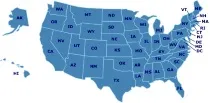
Support Groups
Homeschoolers have created networks of support to provide a way to make friends, get ideas and information, and to offer positive socialization opportunties to their children. You can join in! There are many groups to choose from, many with specific affiliations, like Christian groups or unschoolers’ groups. Some are eclectic, inclusive, and open to anyone. Whatever your interest, you are sure to find other like-minded parents. And if you don’t find what you are looking for, we’ve put together tips for starting your own group.
What's Popular
EZ Pocket
The National Association of Professional Organizers did a study and determined that the average person spends 80 hours per year searching for papers they need but cannot find when they need them. EZ Pocket lets you quickly and easily organize all those household paper items that need action on a certain date. EZ Pocket keeps papers in view, and sorted, while waiting for the "to-do" date to roll around.
Making the Homeschool Decision
Homeschooling is a very rewarding experience, but can also be very trying and stressful. The rewards far outweigh the negatives, but you’ll need to take a look at your own life when making the decision to homeschool or not. Things to take into consideration include your schedule, finances, household, and commitment.
Michael Olaf Montessori Company
The Michael Olaf Montessori Company provides practical advice for using Montessori philosophy in all kinds of settings. "Montessori Materials" are not the most important aspect of this method of education. Too many objects in the classroom or home create what is commonly known as the "supermarket effect," which scatters the child's energy and interferes with concentration and optimum development. The list of essential materials offered by Michael Olaf grows intentionally shorter every year and everything is well tested. They focus on helping parents and teachers create simple, beautiful, educational environments that foster creativity, independence of thought and action, a positive self-image, joy, and a spirit of service to others and to the environment. They also offer two e-books, "The Joyful Child" and "Child of the World," discussing the Montessori method.
Home Schooling: Instilling Jewish Family values
Looking for an alternative to overcrowded classrooms, dwindling per-student funding, metal detectors and mediocre curricula--not to mention social pressures, conflicting values and prohibitive private school costs--a growing number of parents are opting out of the American education system. They're taking the biblical imperative more literally than ever and educating their children at home. Once the bastion of fundamentalist Christians, home schooling is attracting a growing number of Jews.
Beyond Statistics: A Real Look At Black Homeschoolers
In the past couple of years the news has been inundated with national, international and local articles reporting the dramatic rise of homeschooling in the African-American community. Although we often get statistics about Black homeschoolers, we rarely get a glimpse of real families. This article takes you into the lives of Black homeschooling families who are taking their children's education into their own hands.
Senate Kids
This website is published by the New York State Senate. Features the history behind the Senate, how to visit the state capitol, how ideas become laws, along with games, puzzles, and projects.
Who Stole Homeschooling
A look at the change in the homeschooling movement from an inclusive philosophy to a more structured, compartmentalized, and politicized structure.
KTAV Publishing House
For over 75 years KTAV Publishing House has been a trusted name in quality Judaica, offering a large variety of Jewish educational and scholarly books, gifts, and resources.
Count the Cost
When parents are considering homeschooling, they need to count the cost because there are many expenses to consider when contemplating educating their children. The costs are not just financial, but also emotional and physical.
The Homeschooling Image: Public Relations Basics
This free e-book download contains Mary Griffith's work addressing issues concerning the image of homeschoolers as presented by individual homeschoolers and homeschool organizations. It is written for support group leaders and activists in the homeschooling movement who want solid information on dealing with the public. Topics include: Getting Started, Looking Professional, Announcing Yourself, Being Interviewed (with tips for talking with the media, print interviews, broadcast interviews, and talk radio), Putting Your Message Out, and Events & Community. This book was originally published in 1996.
Resources
Looking for Another State?